
They tried to bury us.
They didn’t know we were seeds.
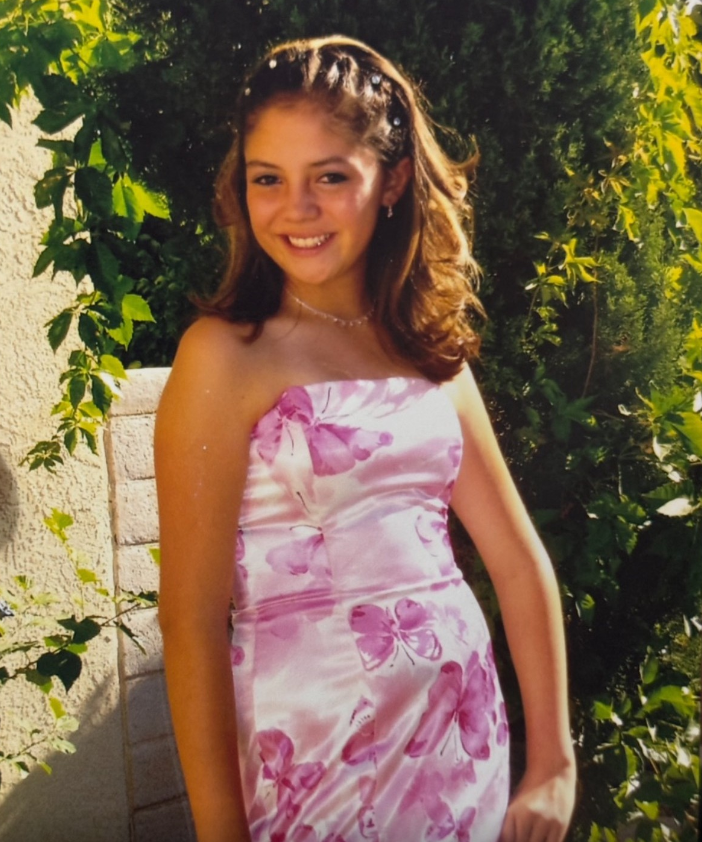
Lex Garcia
High school in Rio Rancho was not marked by Friday night lights or wondering if my car could make it up the mesa. What defines my coming of age is a man I trusted who stole my childhood by raping me for two years.
This man was my teacher.
“I find that today I am in love with you, Alexandra. And that makes me feel good. It helps relax the feelings that want so much to see you again. To kiss you. To put my mouth on your body. I think of little else.” His words, repeated in hundreds of emails he sent me, romanticized and justified his criminal conduct. For years, he carried out compulsive sexual acts on me in his classroom, in parking lots, or wherever his urges demanded I be. I still feel the association of completing my daily tasks in high school, washing petri dishes as his lab assistant, while his hands were inside of me.
Every day my heart breaks for that young girl, the younger version of me. It took me 15 years to understand that what happened to me was not a love story—it was abuse. It took even longer to admit it to anyone that could help me. Childhood sexual abuse persists because abusers use power, silence, and time to run out the clock, knowing that survivors are often pushed past the point where justice is possible.
I understand firsthand that silence is not simply fear-based; it is often enforced. Survivors are dismissed, doubted, or pressured to stay quiet—especially when the abuser holds power or public trust. The harm caused by institutional inaction does not end when the abuse stops. It follows survivors for decades.
I founded Que Viva Los Survivors after testifying and serving as the lead victim advocate to extend the statute of limitations. I learned that survivors are constantly spoken about, but rarely spoken with. Decisions about our bodies, our trauma, and our access to justice are made behind closed doors, without survivors in the room. We are treated as risks to be managed instead of people who deserve to be heard. We deserve a seat at the table—not as symbols, but as experts in our own experiences.
Today, I use my voice to confront those systems head-on. I advocate for ending the civil statute of limitations for childhood sexual abuse in New Mexico so survivors are given the time, space, and legal ability to seek justice on their own terms. This work is rooted in the belief that no individual or institution—public or private—should be shielded from accountability simply because time has passed.
Storytelling is central to my advocacy. By naming what happened to me, I challenge the culture of silence that protects abusers and isolates survivors. I share my story not for sympathy, but for truth, power, and collective healing—standing with and for those who were never believed, never protected, or never given the chance to speak.
This work is about reclaiming power and returning shame to where it belongs. Through our advocacy, Que Viva helps survivors release the burden they were never meant to carry and call out the systems that failed us. Our collective voice is both a reckoning and an invitation: to listen, to believe, and to act.
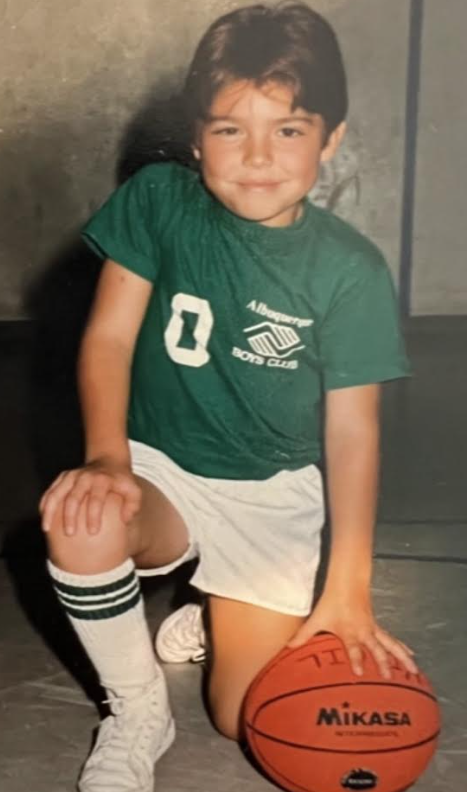
Andy Castellano
Andy Castellano, sexual abuse survivor and author of Where Monsters Lurk
In the late 1980s, I attended the Albuquerque Old Town Boys and Girls Club for their after school and summer youth recreation programs. I was sexually abused by the director of the Club. I wasn’t the only boy abused, up to 70 other boys were also abused over his 15-year tenure.
To date 15 men have received a settlement from the Boys and Girls Club of America, but they won’t give me a settlement because of the New Mexico statute of limitations for childhood sexual abuse crimes.
I was inspired to write my book after watching the 2022 documentary, Leave No Trace, on the Hulu network, about the Boy Scouts of America sexual abuse scandal.
When I heard other men talk about their experiences of transforming their lives from victim to survivor and how they worked together to hold the Boy Scouts of America accountable to receive a monetary settlement, I became motivated to do the same thing for myself and the other men who were abused at the Albuquerque Old Town Boys and Girls Club.
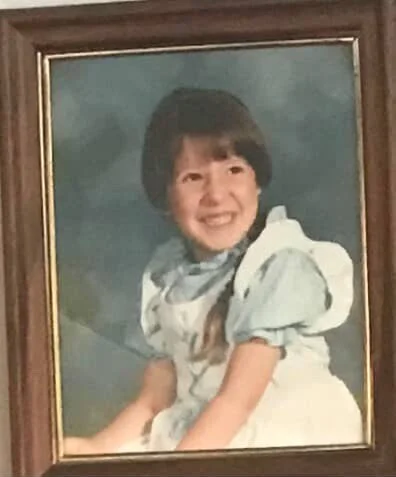
Dee
When I was six years old my parents divorced. My father was in the military so this left my mom without housing. She took a job as a live-in nanny and my brother, her and I moved in with a family. The family is nameless and faceless in my memory. So much information of our time living there is wiped from my memory. Sometimes I sit and strane to remember details with just a thread coming back before I give up. It's odd what our brains and our hearts do to protect us.
What I do remember is that the daughter and I were a similar age and we shared a room. She was very controlling and there was a power dynamic because my mom worked for her family. I remember her bossing me around and I did what she said. We had separate beds but at some point she started to ask me to sleep in her bed with her. She said she was scared. We would whisper and laugh. Then the whispers changed. She started to whisper sexual things. These were some of the most taboo things I have ever heard to this day. As days went by she got bolder and the things she told me got more vial. Eventually she did more than whisper. She did things to me that I didn't understand all while whispering these vial things into my ear.
Due to her keeping me up all night I started to take long naps during the day. At first she left me alone. Eventually she started to insist she needed naps as well. To create some space I started sleeping on the floor. She was angry with the change so she took my blanket and pillow away from me. I still refused to sleep on the bed. So eventually she moved to the floor next to me. She was again touching me and whispering things. She was so bold she was doing it in the broad daylight with the household up and moving around the home.
My mother came in one day to put clothes away and found her tormenting me on the floor. I don't remember the details but I know we left. My mom grabbed me and my brother and we left. My mom took another nannying job and life went on. It was never spoken about and I forgot what occurred.
At 16 my mom and I were driving down a country road in Texas to go visit my grandparents. Something triggered the memory and I had my very first panic attack and started to cry and asked my mom if it happened. She said yes. At 16 I realized that it wasn't normal for a child around 6 years old to know about the things she knew about and do the things she did to me. I asked my mom how this was possible. She let me know that after we left she found out that the father had been doing the same to the daughter. It wasn't reported, he wasn't prosecuted. He had just moved out and the kids were told he was working out of town. Triggering the need for a nanny. The shame the family felt kept them silent. Due to that silence I was hurt.
As an adult I wish I would have asked more questions at 16. Who is this man? Was he ever reported? How many people has he hurt personally? How many people have been hurt in his wake? Statistics say that his daughter and I were not the only ones. I don't know what steps my mom took after she found me. I don't know what discussions took place. If the authorities were called? I often wonder if she was bribed to keep silent. I don't judge her choices at the time and know her heart and know that she did what she thought was best at the time. But if he was never held accountable and I could report him 10, 15, 20 or the now 37 years later. I would. If it meant I could protect someone or get justice for all whom he has hurt, I would. If it meant that one less person is afraid of the dark. One less person has night terrors. One less person flinches when someone whispers and touches them at the same time. I would.
His torment of others and the shame it caused is not what should harbor him while leaving others to drown in his wake.
Despite what he and his daughter did, I am strong. In my 40's I have a successful career, married to the most loving man and have 5 incredible children. When my first son was born I made a promise that I would never apologize for doing what is best for them. There are no sleepovers. They have been taught about what could happen. What to do if they feel unsafe. They know I have their back and will protect them at all costs. I can proudly say that the hurt and pain ended with me.

Anonymous
I was a student when an adult in a position of authority began treating me differently from other students. He often singled me out for small infractions. At first, I thought he was just a jerk that didn’t like me. But that perspective quickly changed.
One day, after I was caught using my phone in class, he took it away and told me I could only have it back at the end of the school day. When I went to pick it up, he told me he was hard on me because he saw potential in me—that he held me to a higher standard because I was different, special. At the time, I didn’t see this as manipulation. I was a straight-A student. I believed him when he said he cared about me and my future.
From that moment on, the dynamic between us changed. I started to feel his eyes on me more often—not the kind of eyes that were supportive or encouraging, but the kind that wanted something from me. I began visiting his classroom after school. At first, we only talked. He’d say things like, “I see you every time I close my eyes.” Eventually, it became more than just talking. We kissed. He put his fingers inside of me, his mouth on me. Asked me to put my mouth on him. Ultimately, I became too scared to go any further. I look back now and thank my younger self for placing that boundary.
When the school year ended, he suggested we meet outside of school. During one of those meetings, he told me he was “ready to turn his life upside down” for me. As a teenager, I believed him. But I also remember thinking logically about what he was saying—that he was an adult, married, and I hadn’t even graduated high school. As an adult, I now see those words for what they were: a way to manipulate my teenage emotions.
As a teenager, I believed I was mature enough to understand what was happening. But the part of the brain responsible for decision-making and understanding consequences does not fully develop until the mid-to-late twenties. It wasn’t until my mid-twenties that I truly understood the gravity of what I had experienced.
What I once regarded as a shocking or unbelievable chapter of my life, I now understand as heartbreaking. And yet, the law precludes survivors from holding their abusers accountable after a certain age. It assumes we should have already understood and worked through what happened, when many survivors are only just beginning to process the harm.
The statute of limitations creates a dangerous presumption—that survivors are healed, or that justice matters less as time passes. Trauma does not operate on a timeline. Survivors deserve the right to pursue justice, no matter how long it takes to find the courage to do so.